Epigenetic Age vs Chronological Age in Cohort Studies
Biological aging, not calendar years, predicts disease and decline.
Two people can share a birthday and still carry very different odds of a heart attack, a stroke, or a cancer diagnosis in the next decade. This piece is about why that happens, and about the growing body of cohort evidence showing that the gap between a person's calendar age and their biological age, not either number by itself, is what actually predicts disease risk, cognitive decline, and mortality.
A birthdate's unreliability as a proxy for biological vulnerability
A birthdate is fixed the moment it happens. It tells the same story for every person born on that day, regardless of what their body has absorbed, burned through, or repaired since. Two people of the same chronological age can have meaningfully different biological conditions, disease risks, and mortality trajectories, making the calendar a limited predictor of health outcomes. Chronological age can't explain that difference, because it was never designed to; it only counts years.
Biological age tries to do something harder. It attempts to capture the condition of tissues and organs as they actually function, the molecular wear, the physiological strain, the cumulative mark of environment and habit on the body's systems. An eBioMedicine editorial places this distinction at the center of modern aging research, noting that public interest in biological aging is rising quickly even as questions about how to translate it into clinical practice remain unresolved.
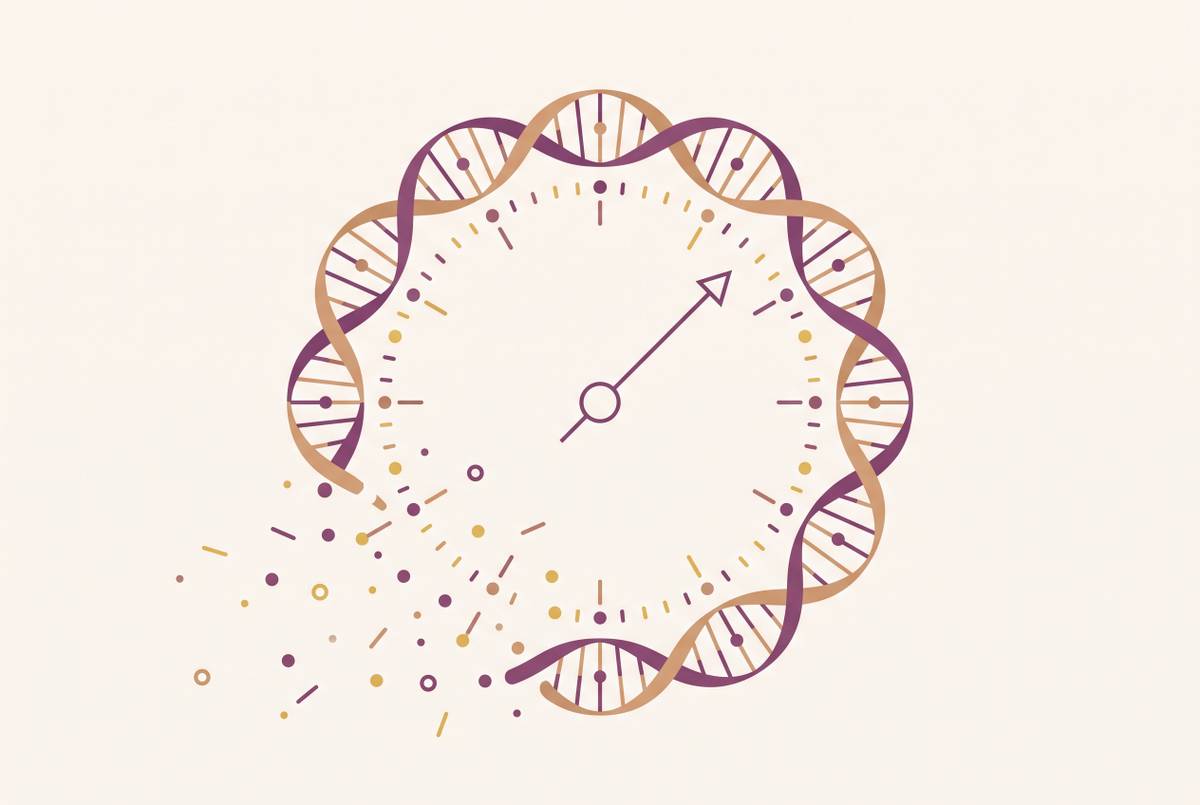
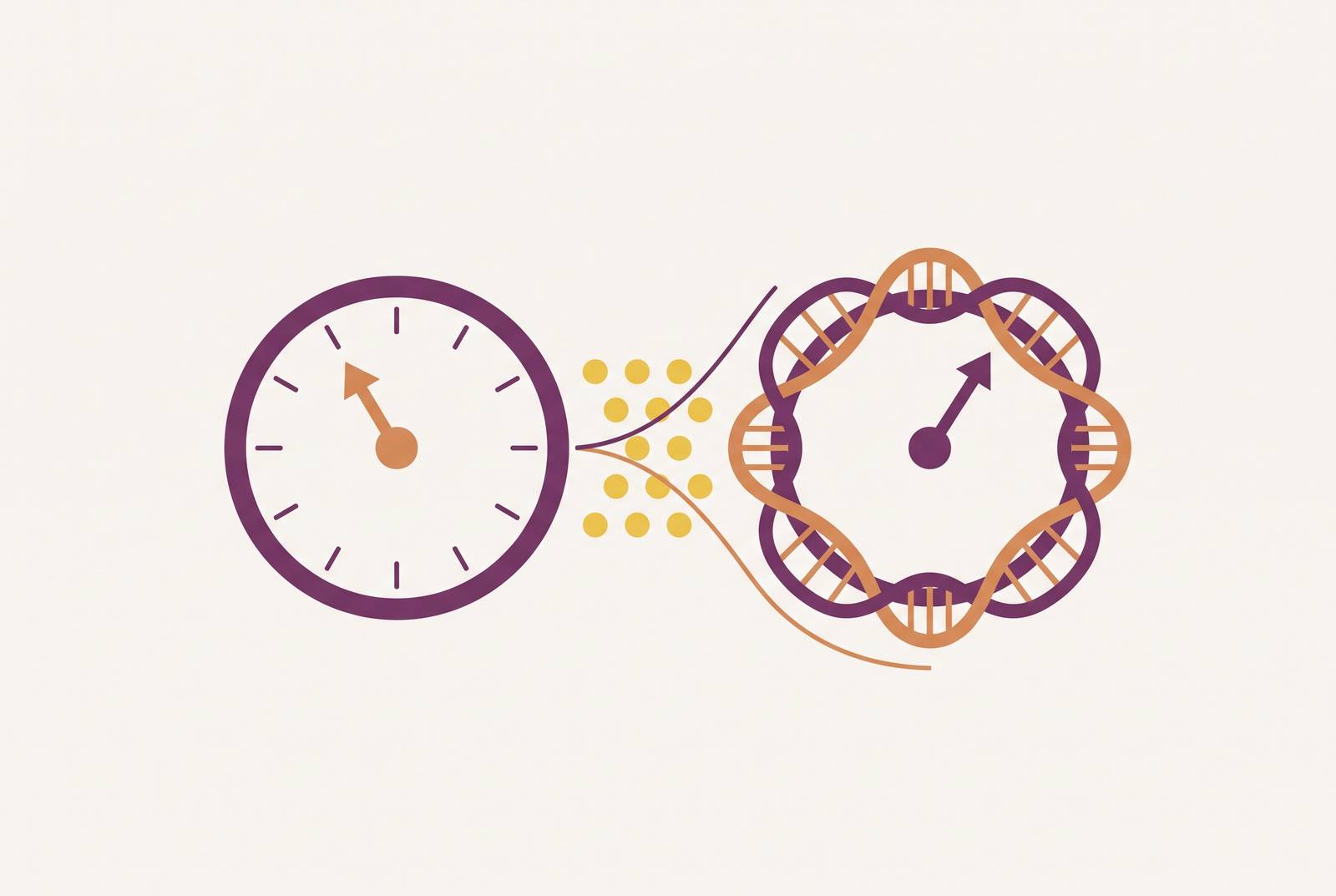
None of this means chronological age is useless. It's a scaffold, a starting point. The real information appears in the space between the two numbers, the gap between what the calendar says and what the body's molecular record shows. Every study, every clock, every finding described below is really a study of that gap.
DNA methylation clocks and biological age estimates
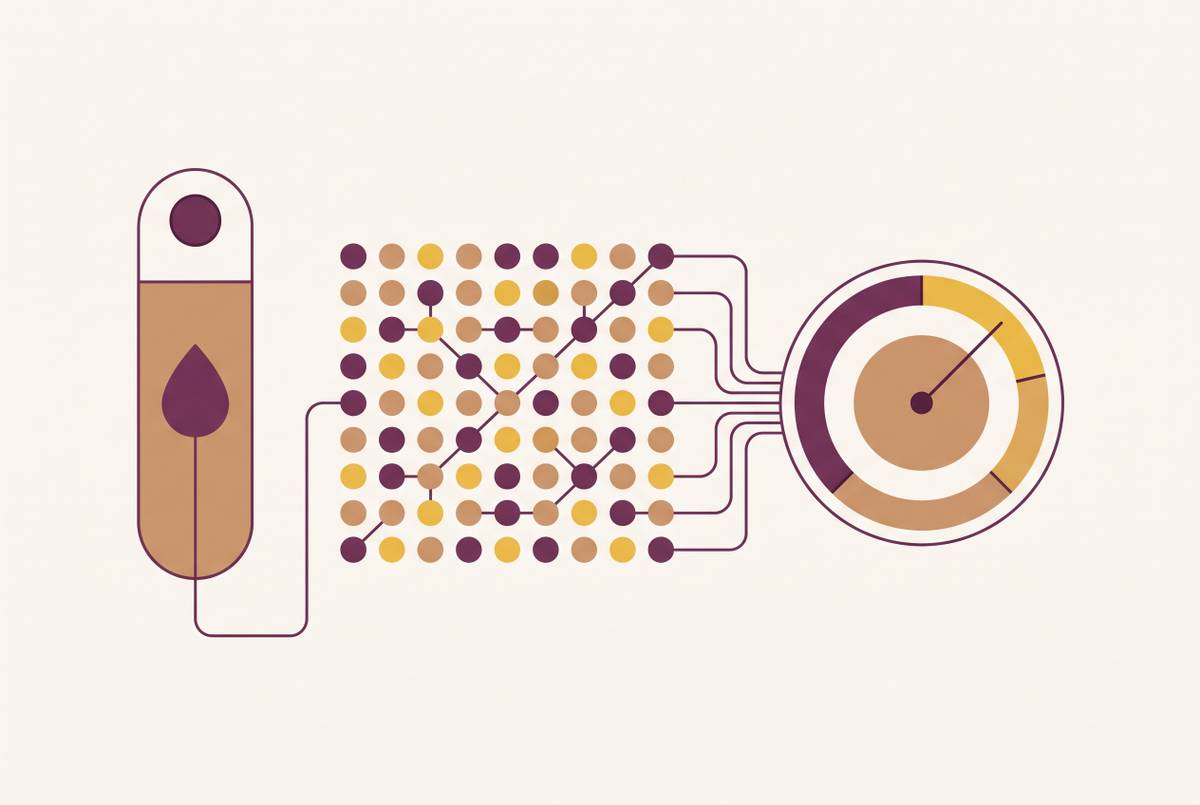
The leading tool for measuring that gap reads a chemical signature written directly onto DNA. DNA methylation attaches methyl groups to cytosine bases at specific locations called CpG sites, and these patterns shift in predictable, non-random ways as a person ages. That predictability is what makes the pattern useful: if methylation changes followed no rule, there'd be nothing to measure against. Because they do follow a rule, researchers can build statistical models, trained on methylation data from large groups of people, that estimate age from the pattern alone and then flag when someone's biology is running ahead of or behind their calendar.
Three generations of these models now exist, and the differences between them matter for reading the rest of the evidence here. First-generation clocks, including Horvath and Hannum, were built to predict chronological age from methylation data, and they do that job with real accuracy, though they're weaker at forecasting actual health outcomes. Second-generation clocks, PhenoAge and GrimAge among them, took a different approach: they were trained directly on mortality and disease incidence rather than on the calendar, and as a result they show stronger ties to long-term health trajectories. A third tool, DunedinPACE, breaks from both: instead of producing an age estimate, it measures the pace at which someone is aging, which makes it especially sensitive to catching change after an intervention.
A 2026 Frontiers review ties this together by noting that the gaps between methylation age and chronological age, the epigenetic age acceleration this piece keeps returning to, track with environmental exposures, lifestyle factors, and chronic disease. The measure behaves as a dynamic signal rather than a fixed label. The enzymes responsible for maintaining methylation patterns, DNMT1, DNMT3A, and DNMT3B, lose function or become dysregulated with age, so methylation maintenance grows imperfect, and oxidative stress and inflammation make the problem worse, producing the mechanical basis for age-related methylation drift. That's the molecular root of why the clock can drift from the calendar in the first place.
Epigenetic age acceleration and mortality risk in large cohort studies
The case for taking epigenetic age seriously rests on cohort data, not single snapshots. A study published in Nature Aging in 2026 followed a cohort for as long as 24 years and found that people whose biological aging accelerated faster over time faced higher mortality risk, independent of where their epigenetic age started. The direction and speed of change mattered on their own, separate from the starting number. That finding argues for tracking someone's trajectory over repeated measurements rather than relying on a single test, because a single reading can't tell you whether a person is drifting toward risk or away from it.
The same pattern appears in stroke risk. A meta-analysis pooling 13 studies found a significant link between accelerated biological aging and stroke risk, and the association was stronger for a first stroke than for a repeat event. That stronger signal for a first stroke suggests epigenetic aging is picking up vascular vulnerability that standard risk factors don't fully explain. A separate 10-year longitudinal study found that accelerated biological aging predicted higher mortality specifically among patients who had already had a stroke.
Frailty tells a parallel story. A longitudinal meta-analysis spanning five studies found that higher GrimAge acceleration consistently tracked with increases in frailty across cohorts. And the signal isn't confined to cardiovascular and frailty outcomes. A study in eBioMedicine combining longitudinal epidemiology with Mendelian randomization identified specific aging-linked CpG sites whose methylation status appears to shape colorectal cancer risk through altered gene expression, and accelerated biological aging showed particularly strong predictive value for early-onset colorectal cancer. That points to epigenetic drift conferring cancer vulnerability earlier in life than the calendar would suggest. Put these findings together: a pattern appears across mortality, stroke, frailty, and cancer, in which acceleration predicts risk across organ systems, and the trajectory of that acceleration carries information beyond any single reading.
Epigenetic age acceleration and cognitive decline, independent of chronological age
The same signal reaches into brain function. In the Health and Retirement Study, a 2026 analysis found that each one-year increase in baseline GrimAge acceleration carried 1.05 times higher odds of cognitive change during follow-up, even in models fully adjusted for other factors. That number sounds modest on its own, but the Health and Retirement Study is a nationally representative longitudinal cohort, so the finding carries weight well beyond what a single-site study could claim.
The link extends past clinical cognitive assessments into daily functioning. Research from Stony Brook University and Penn State, published in the Journals of Gerontology: Series A (Biological Sciences and Medical Sciences), connected epigenetic age acceleration to cognitive performance in everyday life, and found that chronological age and GrimAge acceleration each explained a different share of that performance. Neither one captured everything on its own. What does that tell a reader paying attention to both? Cognitive decline doesn't track years passed so much as it tracks how fast the underlying biological machinery is wearing down, and that wear is measurable before any symptom shows up.
Drivers of epigenetic age acceleration and cohort variation
So where does the gap actually come from? The same behaviors that cohort studies tie to faster epigenetic aging also explain why two people with the same birthdate can carry very different biological ages. A longitudinal multi-cohort study published in eBioMedicine found that smoking, higher BMI, elevated blood glucose, and poor blood pressure control all accelerate aging as measured by DunedinPACE, while physical activity and a healthier diet slow it down.
The effect isn't uniform across sexes. Complementary findings published in BMC Medicine found that avoiding nicotine and controlling glucose had a stronger effect in male individuals, while physical activity, glucose regulation, and healthy BMI carried more weight in female individuals. The same intervention, in other words, may not move the needle by the same amount for everyone. Environmental exposures also affect the measure: air pollution and radiation have both been linked to accelerated DNA methylation age, showing that epigenetic age reflects a cumulative record of what a body has been exposed to, beyond the choices a person makes.
The mechanism connects back to the enzymes described earlier. Oxidative stress and inflammation alter how DNA methyltransferases function, degrading methylation fidelity over time, and that's the pathway through which chronic cardiovascular risk factors turn into measurable epigenetic aging. This explains why people moving into faster aging trajectories tend to also show worsening cardiovascular profiles. The relationship runs in both directions and reinforces itself over time, rather than acting as a single isolated hit. The practical consequence is that the same markers a clinician already tracks, blood pressure, glucose, BMI, are legible in the epigenetic record, and the clock may pick up their cumulative damage before those markers cross a clinical threshold.
Intervention studies on slowing or reversing epigenetic age acceleration
If acceleration is driven by modifiable factors, the next question is whether it can be reversed. Intervention trials show that epigenetic aging, especially as measured by DunedinPACE, does respond to sustained changes in diet and lifestyle, though short-term fixes and supplement-only approaches produce results that are inconsistent and sometimes move in the wrong direction.
The DO-HEALTH trial, a randomized controlled study testing omega-3, vitamin D, and exercise, found consistent effects of omega-3 in slowing biological aging across PhenoAge, GrimAge2, and DunedinPACE, with the reductions in PhenoAge and GrimAge2 larger over three years than the more modest reduction seen in DunedinPACE. The CALERIE calorie restriction trial produced a small but measurable drop in DunedinPACE. Diet pattern affects the outcome more than any single nutrient does: reductions in DunedinPACE have shown up following a vegan diet, a Mediterranean diet, and a Green Mediterranean diet. Six months of cycling-based endurance exercise reduced GrimAge in healthy adults, and in people with mild cognitive impairment, two years of omega-3 fatty acids and vitamin D3 reduced both PhenoAge and GrimAge. Even early life matters: a protein-energy supplement given during a child's first thousand days reduced PhenoAge, DunedinPACE, and GrimAge in a study of more than a thousand children, suggesting epigenetic aging is shaped across the entire lifespan rather than starting in adulthood.
Then there's a finding that deserves equal weight, because it keeps the rest of this evidence honest. A 12-month nutraceutical intervention combining vitamin B12, vitamin C, zinc, selenium, levomefolic acid, and botanical extracts produced mixed effects across epigenetic aging indicators, and it actually increased DunedinPACE, suggesting the supplement stack sped up the pace of aging rather than slowing it. Not every combination of vitamins and botanicals reduces biological age. Some move the needle in the opposite direction, and this trial is the clearest evidence of that on record.
A separate caution comes from the MACRO Trial, a weight-loss dietary intervention involving 144 obese individuals. DunedinPACE tracked with cardiometabolic markers at baseline, but the trial's authors flagged that short-term shifts in epigenetic aging measures may not fully reflect the underlying cardiometabolic changes taking place. That raises a fair question: are these clocks a reliable target for brief interventions, or do they need more time to register real biological change? The honest answer, based on what's been tested so far, is that sustained change over months or years produces more reliable results than anything attempted in a short window.
Epigenetic age and clinical decisions before symptoms appear: the surgical outcome case
All of this evidence raises a practical question: does any of it change a decision a doctor actually has to make? A 2026 prospective cohort study published in the journal Spine tested exactly that, examining whether epigenetic age, calculated from DNA methylation analysis, was associated with early complications after adult spinal deformity surgery.
The study's premise follows directly from everything laid out above. Chronological age and frailty scores are established predictors of poor surgical outcomes, but the authors argued those measures may not fully capture a patient's biological vulnerability, while epigenetic age, built from DNA methylation, may better reflect physiological reserve and a patient's capacity to handle surgical stress. Two patients of the same age and similar frailty scores can carry very different capacity to withstand a major operation, and standard pre-surgical screening has no way to tell them apart.
That's the clearest illustration of why the gap between epigenetic age and chronological age matters outside a research setting. A surgeon deciding whether a patient can tolerate a demanding spinal procedure needs more than a birth year and a frailty checklist. The molecular record offers a second line of evidence, built not from theory but from the same methylation signal tracked across the mortality, stroke, frailty, cancer, and cognitive studies described earlier. Whether that signal becomes a routine part of pre-surgical screening is still an open question, but the direction these cohort studies point in is consistent: the birthdate on a chart was never going to be the whole story.
Sources
- Epigenetic clocks: advancing biological age measures towards meaningful clinical use
- Epigenetic Age Versus Chronologic Age in Adult Spinal Deformity Surgery: A Prospective Cohort Study - PubMed
- Frontiers
- Epigenetic clocks: advancing biological age measures towards meaningful clinical use - eBioMedicine
- Epigenetic Age Acceleration and Chronological Age: Associations With Cognitive Performance in Daily Life - PMC
- DNA methylation age acceleration is associated with incident cognitive impairment in the health and retirement study - PMC
- Biological age measured by DNA methylation clocks and frailty: a systematic review and meta-analysis - PubMed
- Epigenetic Age Acceleration and Cardiometabolic Biomarkers in Response to Weight-Loss Dietary Interventions Among Obese Individuals: The MACRO Trial - PubMed