Epigenetic Clocks and Drift Explained
Biological aging tests show promise but vary widely depending on what they're actually measuring.
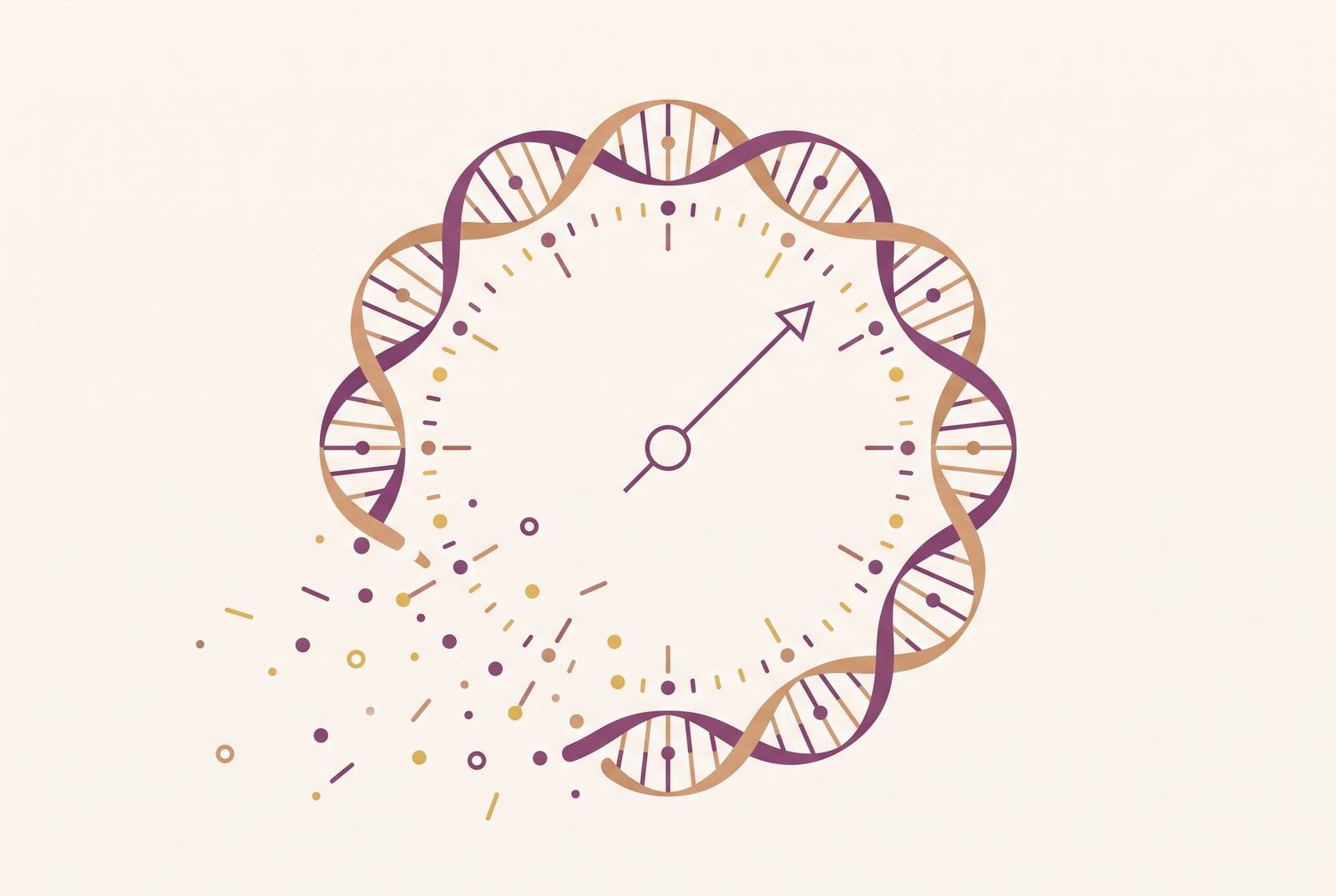
DNA methylation clocks measure the gap between how old a body actually is and how old the calendar says it should be. Two people born the same year can be aging at very different speeds on the inside, and that gap is what these tests are built to catch. A 2026 paper in eBioMedicine pushed the idea out of academic journals and into clinical and wellness conversations, though it also flagged real questions about how reliable these tests are once they hit the commercial market. This piece walks through the molecular basis for these clocks, what they can actually tell you, and where they still fall short.
DNA methylation as a record of aging at the molecular level
DNA methylation is a chemical tagging system. It doesn't change the DNA sequence itself, but it changes how genes get read and used. Think of it less like editing a book's text and more like sticking notes on certain pages, telling a cell which chapters to skip and which to reread.
These tags attach at specific spots called CpG sites, where a cytosine base sits right next to a guanine base along the DNA strand. That tagging pattern is part of why a liver cell behaves like a liver cell and a neuron behaves like a neuron, even though both carry identical DNA. The tags, not the sequence underneath them, decide which genes get switched on in which tissue.
Age wears that regulation down in two directions at once, and both directions cause trouble.
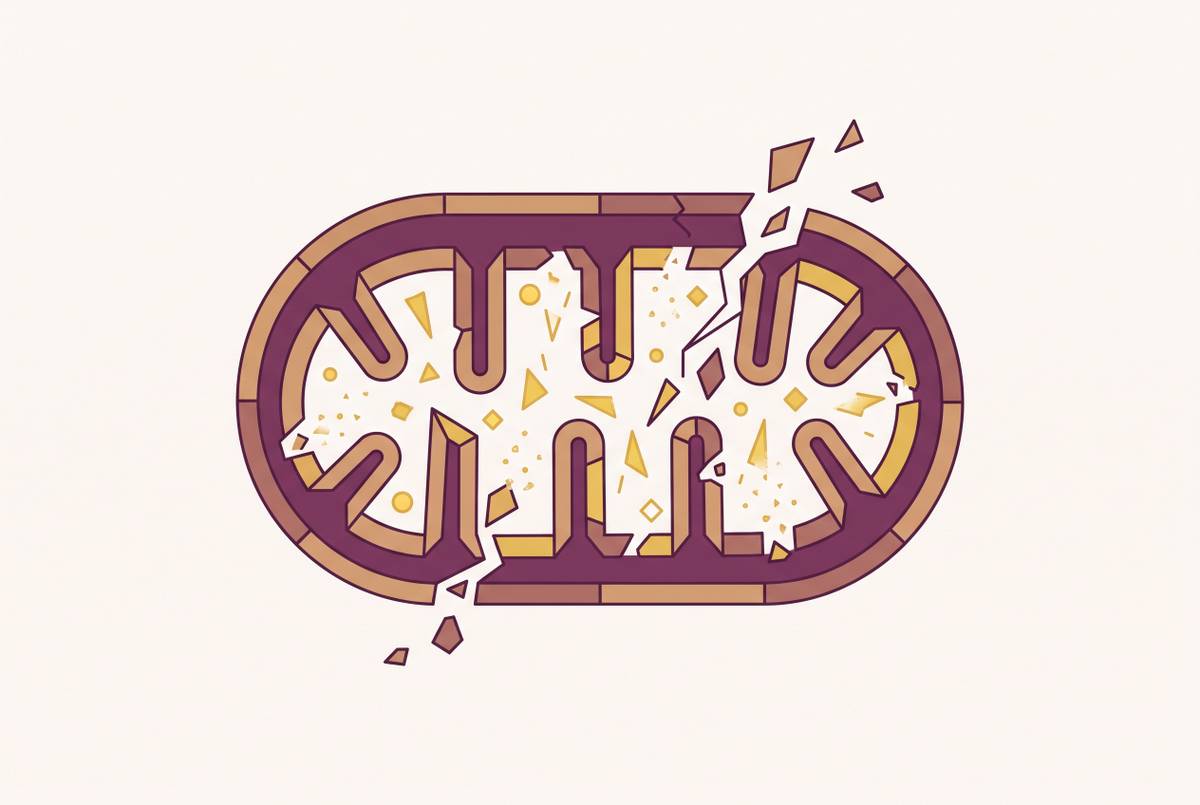
Across broad stretches of the genome, tags get lost. Researchers call this global hypomethylation, and it creates genomic instability, wakes up transposable elements that are normally kept quiet, and can switch on genes that promote cancer. In specific, targeted regions, though, tags pile up instead. This site-specific hypermethylation can silence tumor suppressor genes and genes that manage immune and metabolic function. So the genome loosens in some places and clamps down in others, at the same time, in the same body.
Epigenetic aging isn't the same thing as cellular senescence, telomere shortening, or general genomic instability, though Nature Aging research ties it to nutrient sensing, mitochondrial activity, and shifts in stem cell populations. This dual pattern of loosening and tightening is the raw material clocks are built to read. Everything from here forward is a way of measuring the fallout from that process.
What epigenetic drift is, distinct from an aging clock
Drift is the gradual, somewhat random buildup of methylation changes as the body's control over the process breaks down with age. Calling it random undersells it, though. Some of these age-related changes follow consistent, repeatable patterns tied to actual biological mechanisms, not chance alone. Drift carries both a stochastic piece and a directional one, and mixing the two up is where a lot of confusion about these tests starts.
Drift isn't limited to methylation, either. Reversible changes across histone codes, the three-dimensional folding of chromatin, and noncoding RNA networks all act as regulators of decline as organisms age. At the cellular level, stochastic changes in methylation at gene promoters break down coherent transcriptional networks, which is a major piece of how stem cells age.
One large epigenome-wide drift study, covering 3,538 people and replicated in two independent Chinese cohorts totaling 1,467 people and two independent European cohorts totaling 956 people, found that 10.8% of CpG sites on the 850K EPIC array, 50,385 individual sites, showed statistically significant drift across the genome. Of those sites, 99% showed increased variability between individuals as they aged. Only 1% showed decreased variability.
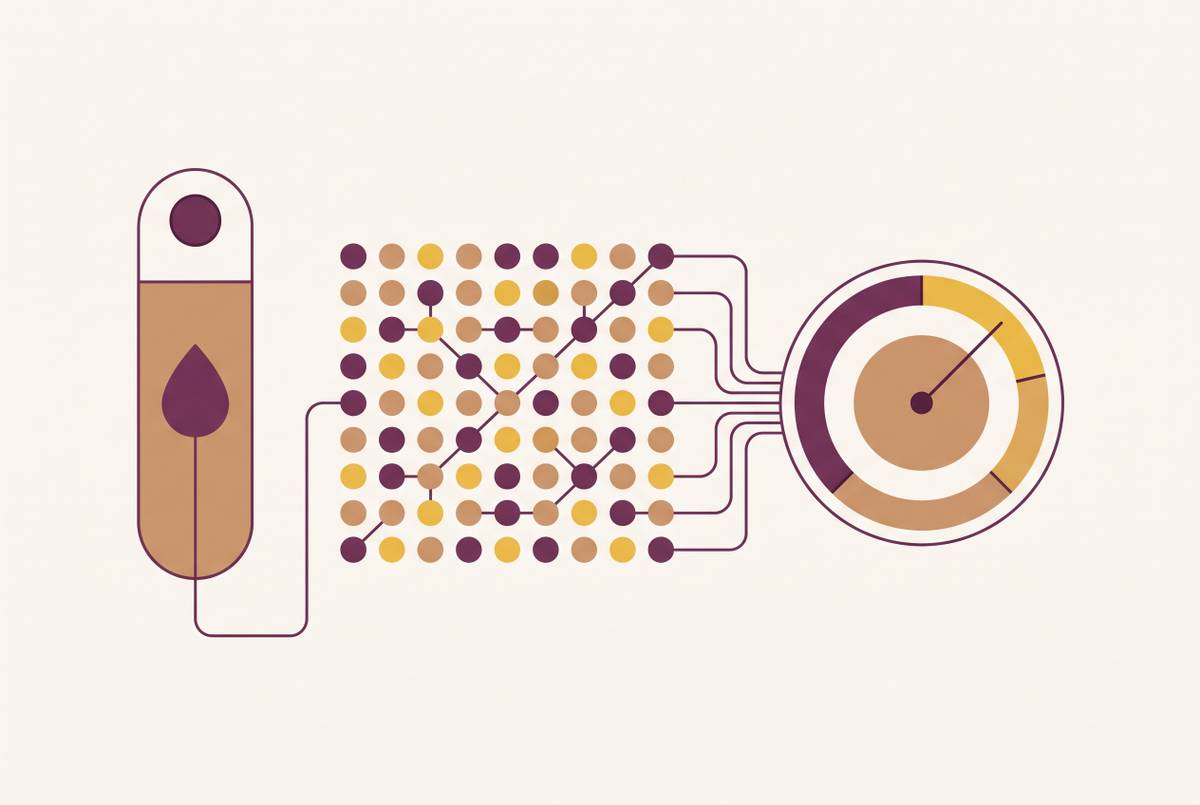
Drift is the phenomenon happening inside the genome over time. A clock is the instrument built to read the fallout and turn it into a number. Drift is the weather, and a clock is the thermometer. Confusing the two is how a person ends up trusting a single number more than it deserves.
How the first generation of epigenetic clocks was built
The earliest clocks had one job: guess someone's chronological age from methylation patterns at a set of chosen CpG sites. The Horvath Clock, published in 2013, uses 353 CpG sites spread across the genome and hits a correlation of 0.96 between its estimate and actual age, across multiple tissue types. That's a remarkably tight fit, and for a few years it looked like the whole story.
These clocks were built to match the calendar, not to flag disease risk or capture how healthy someone's biology actually is, and that distinction turned out to matter a great deal, as a 2026 study showed. These clocks were built to match the calendar, not to flag disease risk or capture how healthy someone's biology actually is, and that distinction turned out to matter a great deal. A 2026 study looking at men with cardiometabolic problems tested 19 different first-generation clocks and found first-generation clocks showed poor sensitivity to cardiometabolic conditions such as hypertension, ischemic heart disease, obesity, and dyslipidemia. Anyone using a first-generation clock to size up cardiometabolic risk is reading an instrument that was never built for that job, full stop.
As a scientific proof of concept, that first generation was genuinely impressive. It proved methylation patterns encode age-related information with real precision. But matching the calendar and capturing biological relevance turned out to be two separate problems, and the first generation solved only one of them.
What second- and third-generation clocks measure
Later clocks were built to answer a different question: not calendar age, but disease, mortality, and the pace at which someone is aging right now. Four are known by name, and each one is asking something slightly different.
PhenoAge pulls from CpGs that predict clinical biomarkers, including glucose and C-reactive protein, giving a read on systemic metabolic and inflammatory status. It also factors in white blood cell count, tying back to body composition.
GrimAge2 builds in DNA methylation surrogates for plasma proteins closely linked to cardiometabolic risk, including leptin. It also carries surrogate markers for CRP and hemoglobin A1c, reflecting inflammaging and cardiometabolic disease risk built up over a lifetime.
DunedinPACE works differently. Instead of estimating age, it estimates how fast someone is aging right now, a speedometer rather than an odometer. A longitudinal, multi-cohort study in eBioMedicine used DunedinPACE and found smoking, higher BMI, elevated glucose, and poor blood pressure all sped up the pace of aging.
CausAge takes yet another angle, trying to isolate methylation changes causally tied to aging processes rather than changes that just happen to correlate with age.
A study comparing 14 epigenetic clocks put them up against 174 disease outcomes across almost 19,000 people. Second- and third-generation clocks beat first-generation clocks at predicting disease, generally, but no single model won across the board. Running the same blood sample through different clocks can produce estimates that differ by several years. That gap is a sign each clock is measuring a slightly different question. It's a sign each clock is measuring a slightly different question. Picking the wrong clock for the question you're actually asking is the real risk here, more than any flaw in the science itself.
Organ-specific aging is the newer frontier. Different tissues age at different speeds, and a Systems Age approach published in Nature Aging in 2025 uses one blood methylation test to break down aging across the brain, heart, liver, kidney, lung, immune system, inflammatory status, blood, musculoskeletal system, hormones, and metabolism.
The importance of the rate of change in biological age relative to the score itself
Most people who take one of these tests treat the result as a single number to chase downward. That instinct misses the point the research keeps making: the direction and speed of change over time carries more weight than the number itself.
A longitudinal study in Nature Aging, published in 2026, followed people over years and found faster increases in epigenetic clock values predicted higher mortality risk, independent of where someone started and independent of other confounding factors. The starting number mattered less than the slope. Chase the slope, not the score.
This idea has a name: EpiAge acceleration, the gap between epigenetic age and chronological age. Epidemiologically, that gap links to a wide range of diseases, health conditions, lifestyle patterns, and environmental exposures. One test is a snapshot. Repeat testing over months or years tells you whether whatever you're doing is working, or whether the trajectory is quietly getting worse while a single number still looks fine.
There's a real gap here too: clocks can tell you how fast you're aging and how much damage has piled up, but they cannot yet fully explain why. Clocks can tell you how fast you're aging and how much damage has piled up. There's a real gap here too: clocks can tell you how fast you're aging and how much damage has piled up, but they cannot yet tell you how well your body would bounce back from a stressor such as a surgery, an infection, or a hard training block. That resilience question sits outside what any current clock measures, and it comes back up later.
What modifiable factors accelerate or slow epigenetic aging
The eBioMedicine study that tracked multiple cohorts over time found smoking, higher BMI, elevated glucose, and poor blood pressure all sped up biological aging as measured by DunedinPACE. Physical activity and a healthier diet were tied to slower aging. The sex split underneath that pattern is surprising.
A separate set of findings in BMC Medicine found the picture divides by sex. In men, avoiding nicotine and keeping glucose in check stood out as the strongest levers. In women, physical activity, glucose control, and a healthy BMI carried the most weight. Same clock, different levers. That split matters if someone's building a plan around a partner's or a parent's results and assuming it should look identical to their own.
Hormones matter too. Hormonal factors have also been linked to shifts in epigenetic aging pace in research on sex differences in biological aging. These hormonal and reproductive factors are a reminder that epigenetic aging systems don't run in isolation from each other.
Visceral fat deserves its own line, and arguably more attention than it gets. Epigenetic age acceleration tracks with higher BMI and excess body fat. So when a PhenoAge or GrimAge score comes back elevated, high visceral fat and inflammation are the first two things to check, before reaching for anything more exotic. Inflammation and oxidative stress, both common with age, push methylation abnormalities further off course, which feeds disease progression, which feeds more inflammation. That's a loop, not a straight line, and that's why one good month rarely moves the score.
None of this is lifestyle advice dressed up as science. It's built into the architecture of the clocks themselves. GrimAge2 literally encodes leptin, an adipose hormone, plus CRP and hemoglobin A1c. PhenoAge encodes glucose, CRP, albumin, creatinine, lymphocyte percentage, mean cell volume, red cell distribution width, alkaline phosphatase, and white blood cell count. The biomarkers and the clocks are the same conversation, measured two different ways.
The connection between epigenetic age acceleration and cardiovascular, metabolic, and cancer risk
Start with stroke. A systematic review and meta-analysis covering 13 studies found people with accelerated biological aging were consistently more likely to have a stroke. The link suggests epigenetic aging is picking up on vascular vulnerability that standard risk factors don't fully explain on their own.
Cardiometabolic disease shows a similar pattern. A study looked at whole blood methylation in men with hypertension, ischemic heart disease, obesity, and dyslipidemia and found meaningful epigenetic age acceleration, most visible in GrimAge, GrimAge2, and DunedinPACE, alongside shortened epigenetic telomere length. First-generation clocks, again, were far less sensitive to these signals. That gap appears study after study because each clock measures a different biological signal, not by coincidence.
Type 2 diabetes adds another layer. A study of 752 people newly diagnosed with the disease, 102 of whom went on to have a major vascular event, identified 461 methylation sites tied to those events. That work was published in 2025.
Then there's cancer. An eBioMedicine study identified 15 aging-linked CpG sites where methylation changes appear to shift the expression of genes including TNF, NCF2, BICC1, and DIP2B, and tied those changes to colorectal cancer risk. Accelerated biological aging showed predictive value for colorectal cancer risk, pointing toward potential clinical uses beyond standard screening approaches.
Aberrant methylation patterns more broadly appear in cardiovascular disease, type 2 diabetes, and neurodegenerative conditions like Alzheimer's. Across every one of these conditions, the pattern repeats: second- and third-generation clocks pick up the signal, first-generation clocks mostly miss it. Anyone still leaning on a first-generation clock for disease risk is reading the wrong instrument, and by now the data on that point isn't close.
What current epigenetic clocks genuinely cannot tell you
There's no gold standard clock, and pretending otherwise is the most common mistake in how these tests get marketed. The Nature Communications analysis, covering 14 clocks and 174 disease outcomes, found real variation in effect sizes and in how many associations each clock caught. No single model won across the board.
Scores diverge from one another, too. Running the same blood sample through different algorithms produces biological age estimates that can differ by several years. That spread reflects real differences in what each clock was built to measure, not sloppy math on anyone's part.
Tissue is a separate problem. Most clocks are trained on blood or saliva, which limits how well they generalize to other tissues. Tissue heterogeneity, different cell types mixed together in one sample, makes it hard to isolate cell-specific aging patterns without heavy statistical deconvolution work.
Correlation versus causation is still an open question, and probably the one least likely to get resolved soon. Most of these clocks were built from correlations: methylation sites that happen to track with age or disease. Whether the methylation changes actually drive the outcomes, or just ride alongside them, isn't settled.
Then there's the resilience gap raised earlier. Current clocks work like an odometer or a speedometer: they show accumulated wear or the current pace of decline. What they can't show is how well a biological system could recover, reorganize, and get back to steady state after a real stressor. Two people can post the same biological age score and have very different capacities to bounce back from surgery or a bad infection, and no clock on the market today tells them apart. A framework called EpiAge-R, published in a peer-reviewed journal in February 2026, is an early attempt to close exactly that gap.
None of this makes the score meaningless. Treat it as a signal to watch alongside standard clinical bloodwork, not a verdict handed down from a lab in place of it. A 2026 medical review from HealthE1 found that short retesting intervals can shift results even when the underlying biology hasn't actually moved. A single reading taken in isolation can mask whether the real trajectory is improving or getting worse. Context and trend tell you which. One number by itself doesn't.
Using epigenetic clock information as a proactive health tool rather than a verdict
At their best, these tools mark a shift away from reacting to symptoms after the fact and toward spotting a biological trajectory before disease appears in a clinic. Epigenetic clocks and related EpiScores are starting to get used exactly that way, catching vascular and metabolic vulnerability that hasn't yet turned into a diagnosis.
Anyone considering one of these tests should check a few things before trusting the number that comes back. Which generation of clock is being used matters enormously: a first-generation clock is a poor fit for anyone trying to gauge disease risk, and a result built on one deserves real skepticism. Whether the result is a one-off snapshot or part of ongoing tracking matters just as much, since trend beats any single reading. Whether the test breaks results down by organ or system matters too, given how unevenly different tissues age, and whether a clinician actually reviews the result, rather than a raw number landing in an inbox with no context, separates a useful test from a novelty one.
The biomarkers baked into these clocks, glucose, CRP, hemoglobin A1c, leptin surrogates, are all things a standard lab panel can measure directly. Anyone who can't access epigenetic testing itself can still track a lot of the underlying biology through ordinary bloodwork. Preventive testing services that offer direct access to those panels, with clear pricing and a clinician actually reviewing the results, give people a way to keep tabs on the same upstream factors these clocks are built from, without waiting for a symptom to show up or a doctor's referral to get one.
Biological age is a moving signal that responds to change. It responds to the same modifiable habits that appear across every clock discussed here: glucose control, movement, sleep, inflammation. That's the whole point of tracking it.
Sources
- Epigenetic clocks: advancing biological age measures towards meaningful clinical use - PMC
- Epigenetic Clocks, Resilience, and Multi-Omics Ageing: A Review and the EpiAge-R Conceptual Framework
- Epigenetic clocks: advancing biological age measures towards meaningful clinical use - eBioMedicine
- The relationship between epigenetic age and the hallmarks of aging in human cells | Nature Aging
- Biological-Age Tests: Epigenetic Clocks 2026 - HealthE1 Mobile Medical
- knowyourdna.com
- nature.com
- genome.cshlp.org