Sleep Duration, Quality, and Biological Aging Rates
Sleeping between 6.4 and 7.8 hours nightly slows biological aging across multiple organ systems.
Chronological age tells you almost nothing about how a body is actually doing. Biological age tries to close that gap: it measures the molecular and physiological wear that predicts who gets sick and who doesn't. An editorial in eBioMedicine framed this shift as central to where aging research stands now, noting that public and clinical interest in biological age has grown fast, even as real questions about how reliable these measurements are remain unresolved. The tools built to estimate biological age, clocks like GrimAge, PhenoAge, and DunedinPACE, work by reading DNA methylation patterns at specific spots on the genome called CpG sites, and from those patterns they generate a number that predicts health outcomes better than a birthday does. DunedinPACE works a bit differently from the others: instead of giving a static age estimate, it measures how fast someone is aging in years per calendar year, which makes it unusually responsive to changes in daily habits. Sleep fits naturally into this picture because almost everyone does it every night and almost everyone can adjust it, but until recently, nobody had measured it against these aging clocks at a scale large enough to say anything definitive. A study published in 2026 finally did.
Sleep duration and organ aging in a 500,000-person study
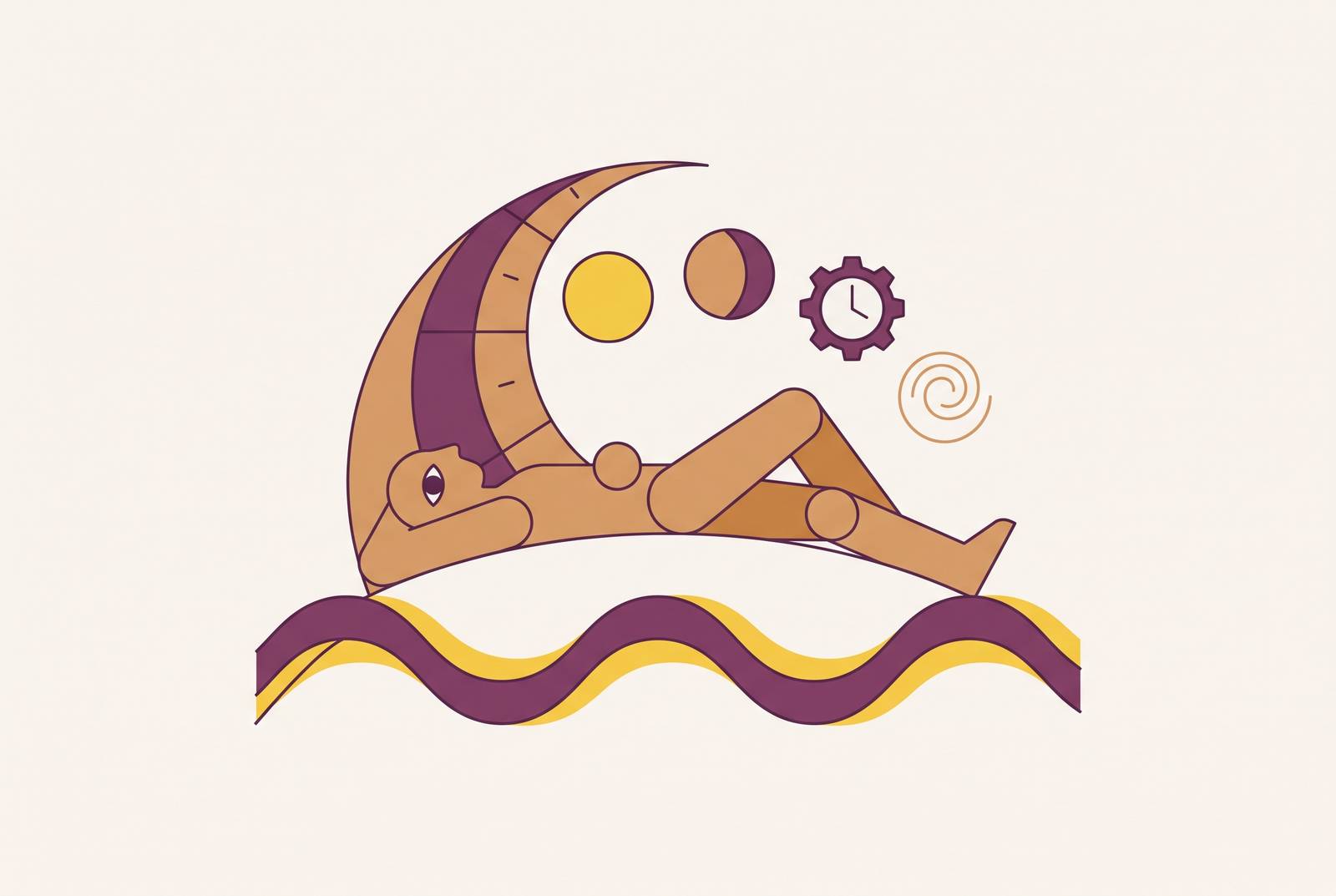
The largest study to date on sleep duration and biological aging clocks found that if you sleep too little or too much, you speed up biological aging. The effect appears across multiple organ systems at once, not just the brain. The study, conducted by the MULTI Consortium and published in Nature, looked at 23 biological aging clocks built from MRI scans, blood protein measurements, and metabolic data, drawn from 500,000 people between the ages of 37 and 84. Researchers call this the biological age gap: how much faster or slower someone is aging than their actual years would predict, and when you trace it against sleep duration, you get a clear U-shape. If you slept somewhere between roughly 6.4 and 7.8 hours a night, you showed the least extra aging beyond what your calendar age would predict, but the exact number shifted depending on the organ system and your sex. That pattern held up with statistical significance across 9 of the 23 clocks tested. Elevated biological age appeared in clocks tracking the heart, lungs, liver, immune system, skin, hormones, fat tissue, and pancreas, not only in clocks built around brain structure. One caveat matters here: the study establishes that these patterns are statistically real across a very large sample, but the published findings don't spell out how much of the variation in aging between people sleep duration actually explains, or how large the effect is for any one person. How much they matter for any single person's health trajectory is still being worked out.
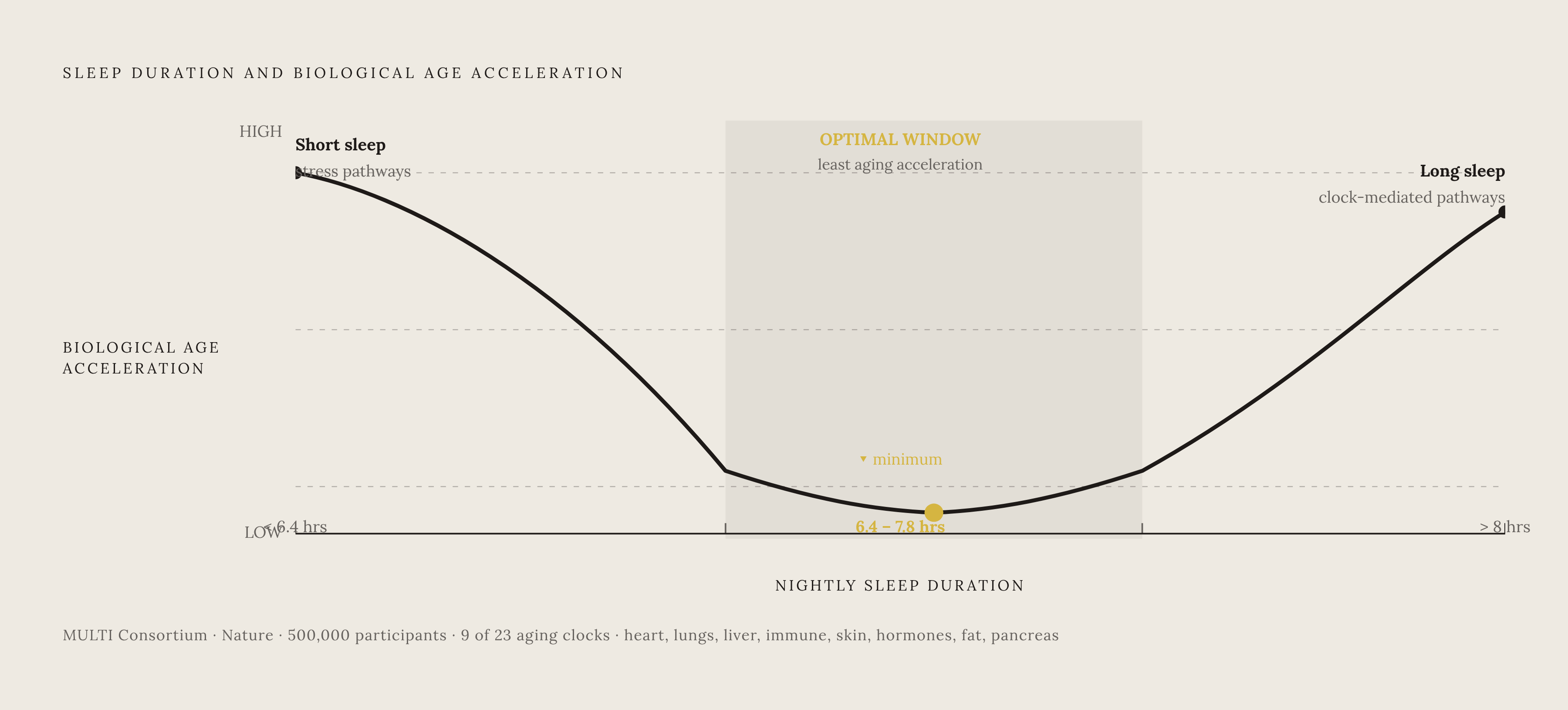
Divergent aging pathways for short and long sleep
It would be easy to read a U-shaped curve and conclude that more sleep is always safer, but that's not what the data shows. Sleeping over 8 hours told a different story. The path from long sleep to neuropsychiatric outcomes ran more indirectly, partly through aging signals detected in brain and fat tissue clocks, which suggests long sleep is often less a cause of poor health and more a symptom of something already present, whether that's depression, breathing problems during sleep, or a chronic illness working in the background. The Nature paper from the MULTI Consortium draws this distinction explicitly: it separates the direct stress pathway tied to short sleep from the indirect, clock-mediated pathway tied to long sleep.
What connects both extremes is that sleep isn't passive downtime. If you disrupt those rhythms, whether by cutting sleep short or by extending it because of an underlying condition, that cleanup process falters. It leaves behind molecular debris, and that's what aging clocks are built to detect. The real prescription isn't "sleep more." You need sleep within the range the data supports, and if you drift too far in either direction, you pay a distinct cost for it. To understand what that cost actually looks like at the cellular level, it helps to look at what sleep disruption does to DNA, hormones, and immune signaling over time.
The epigenetic and metabolic machinery through which sleep drives biological age acceleration
The biological aging signal tied to disrupted sleep is not just a statistical coincidence. Start with DNA methylation, the chemical tagging system that epigenetic clocks are built to read. A review published in Experimental Gerontology, authored by Davinelli, Scapagnini, and Medoro, found that sleep disturbances tied to aging line up with altered methylation patterns in the genes and regulatory regions that control circadian rhythm, the brain's ability to adapt and rewire itself, metabolism, and inflammation. The same review points to a Mendelian randomization study, a method that helps establish cause rather than mere correlation, confirming that insomnia is causally linked to acceleration on the GrimAge clock, using data from UK Biobank, 23andMe, and FinnGen. That matters because it rules out the obvious objection that poor sleep just happens to travel alongside other things that age people faster. A separate study of 3,795 participants in the Health and Retirement Study found that insomnia and short sleep each sped up GrimAge on their own, and having both together did more damage than either alone. There's a genuinely hopeful detail buried in the Davinelli review, too: these methylation changes may be at least partly reversible, so improving sleep quality could partly undo the epigenetic aging signal.
Cortisol and insulin tell a more immediately practical story. Sleep deprivation raises your cortisol during the evening and early night hours, just when it's supposed to be dropping. That elevated cortisol then activates receptors that blunt insulin sensitivity. Just one week of sleeping 4 to 5 hours a night produces measurable drops in insulin sensitivity, and the body doesn't compensate by producing more insulin to make up the difference. The reverse also holds: people who extended their sleep past 6 hours showed real improvements in glucose-related markers, including reduced insulin resistance and better function in the pancreatic cells that produce insulin. Sleep loss also throws off leptin and ghrelin, the hormones that signal hunger and fullness, so you eat more, and that adds another layer of metabolic strain over time.
Inflammation ties these threads together. Poor or irregular sleep raises CRP, the marker clinicians use to track systemic inflammation, so when CRP rises, your cardiovascular risk rises with it. TNF-α triggers IL-6, and IL-6 then drives the liver to make more CRP, and that chain is how a bad night's sleep turns into measurable cardiovascular risk. This burden isn't shared equally. Research on sleep and inflammatory biomarkers found that Black individuals and people with lower socioeconomic status had worse sleep quality along with higher CRP, IL-6, IL-10, and TNF-α, and that sleep quality itself helped explain that gap. Sleep's effect on aging is not neutral, because it compounds existing structural inequity.
Obstructive sleep apnea as the hidden multiplier most people have not tested for
For a large share of people, the problem with sleep isn't a choice about how many hours to log, but an undiagnosed condition that quietly wrecks sleep quality no matter how long they stay in bed. Obstructive sleep apnea, or OSA, happens when the upper airway partially or fully collapses during sleep, producing swings in chest pressure, repeated drops in blood oxygen, and constant fragmentation of sleep. Those effects produce oxidative stress, activate the adrenergic system, damage the lining of blood vessels, and drive chronic inflammation, mapping onto nearly every mechanism described above. Research on OSA puts the average estimated prevalence at 22% in men and 17% in women, with the range varying widely depending on how different studies diagnose it. The condition occurs especially often in people with type 2 diabetes, and when it goes untreated, it worsens insulin resistance and deepens the metabolic aging signal that poor sleep already sets in motion.
Someone with undiagnosed OSA might sleep a full 7 to 8 hours and believe they're in the ideal range, while their oxygen levels, cortisol rhythm, and inflammatory markers tell a very different story. Expert consensus from 2025 recommends routine OSA screening for people at high cardiovascular risk, pairing CPAP therapy, lifestyle changes, and metabolic risk management as the standard early response, treating screening itself as the lever that makes everything downstream work.
In a 2026 study led by Koscova and published in Sleep, researchers applied deep learning to ECG readings collected during standard overnight sleep studies, and the resulting score improved prediction of cardiac outcomes beyond what established risk factors alone could do. Gari Clifford, D.Phil., former chair of Biomedical Informatics at Emory University School of Medicine and now at Johns Hopkins University, said that "adding these scores into sleep studies has great potential for improving early detection of cardiovascular disease, determining who is most at risk, and being more proactive in patient care." A sleep study and a cardiac risk screen are increasingly becoming the same test, run on the same night, from the same data.
Biomarkers reflecting sleep's effect on biological aging
The mechanisms described above all leave signals that are measurable in blood work, several of them long before symptoms appear. Start with the epigenetic pace markers, GrimAge and DunedinPACE, both built from DNA methylation data and both designed to quantify biological aging. DunedinPACE matters in particular because it tracks the current pace of aging rather than a fixed estimate, so it responds to recent changes in habits, sleep included. The eBioMedicine editorial references a multi-cohort study published in that journal in December 2025, which found DunedinPACE sped up with smoking, higher BMI, elevated blood sugar, and poor blood pressure, and slowed down with more physical activity and a better diet. Sleep works through many of those same hormonal and metabolic channels. You can take a GrimAge or DunedinPACE result today as a baseline, then run the same test again after a sustained stretch of better sleep to see whether that epigenetic signal actually moved.
High-sensitivity CRP, or hs-CRP, is the more sensitive version of the standard CRP test, built to pick up the low-grade inflammation that poor sleep tends to raise, and it connects directly to cardiovascular event risk. If you feel confident you sleep enough but your hs-CRP reading is elevated, that deserves a closer look, because it can point toward a sleep quality problem, including OSA that's never been diagnosed.
Fasting insulin, fasting glucose, and HbA1c round out the metabolic picture. Fasting insulin and glucose show you the short-term disruption that comes from cutting sleep short, but HbA1c shows you whether that short-term dysregulation is turning into something chronic. If you extend your sleep past 6 hours, you can see specific improvements in insulin resistance and in how well your beta cells function, so these three markers give you practical, trackable feedback if you're actively working to sleep better.
ApoB and Lp(a) matter for the cardiovascular side of the picture. Insulin resistance driven by poor sleep raises triglycerides and lowers HDL, which is exactly the metabolic profile where standard LDL cholesterol stops being a trustworthy guide to cardiovascular risk. Your genetics set your Lp(a), and it stays fairly stable across your life, so cardiology guidance from the ACC holds that one measurement taken early is enough to guide preventive treatment, since levels above certain thresholds carry meaningfully higher cardiovascular risk on their own. Knowing that number helps even more once sleep-driven inflammation is also in the picture.
Using this information to track healthspan
The connection between sleep and biological aging is solid enough now that it belongs in any serious health tracking routine, but you don't need to test everything at once. The smarter approach is to get a clear baseline, figure out which specific signals look off, and work from there.
Start by figuring out where things actually stand, both with sleep itself and with the biomarkers it touches. Self-reported hours in bed are a reasonable starting point, but they miss quality, fragmentation, and the structure of sleep entirely, so if biomarkers come back abnormal despite what looks like plenty of sleep, OSA or another sleep quality problem is worth ruling out. A baseline panel covering hs-CRP, fasting insulin, glucose, HbA1c, and ApoB gives a working picture of whether ongoing sleep disruption has already started affecting metabolic and cardiovascular risk, often well before any symptoms show up. Epigenetic pace testing adds a layer that standard metabolic panels can't offer on their own: a DunedinPACE or GrimAge result sets a biological aging rate that can be checked again after a real, sustained change in behavior, giving a concrete read on whether that change actually worked at the molecular level, and the reversibility finding from the Davinelli review gives that feedback loop real weight, since methylation changes tied to sleep disturbance may not be permanent.
Retesting reveals changes in biomarkers that a single measurement taken once and filed away would miss. Sleep can change on a shorter timescale than most other health interventions, and a round of biomarker testing after a sustained stretch of better sleep can reveal movement in hs-CRP and fasting insulin fairly quickly, with DunedinPACE following over a longer horizon. The goal is to confirm that the actual trajectory of biological aging has shifted, not to chase a specific number. And honest proactive care sometimes means testing less, not more: someone with solid metabolic markers who consistently sleeps between 6.4 and 7.8 hours doesn't need a full epigenetic panel run every year, while someone with elevated hs-CRP, signs of insulin resistance, and fragmented sleep has good reason to dig deeper.
Sources
- Sleep and aging: The role of DNA methylation - ScienceDirect
- Epigenetic clocks: advancing biological age measures towards meaningful clinical use
- Sleep duration links to biological aging clocks: when sleep gets tough, aging gets going
- SHORT SLEEP AND INSOMNIA ARE ASSOCIATED WITH ACCELERATED EPIGENETIC AGE